19 October 2026
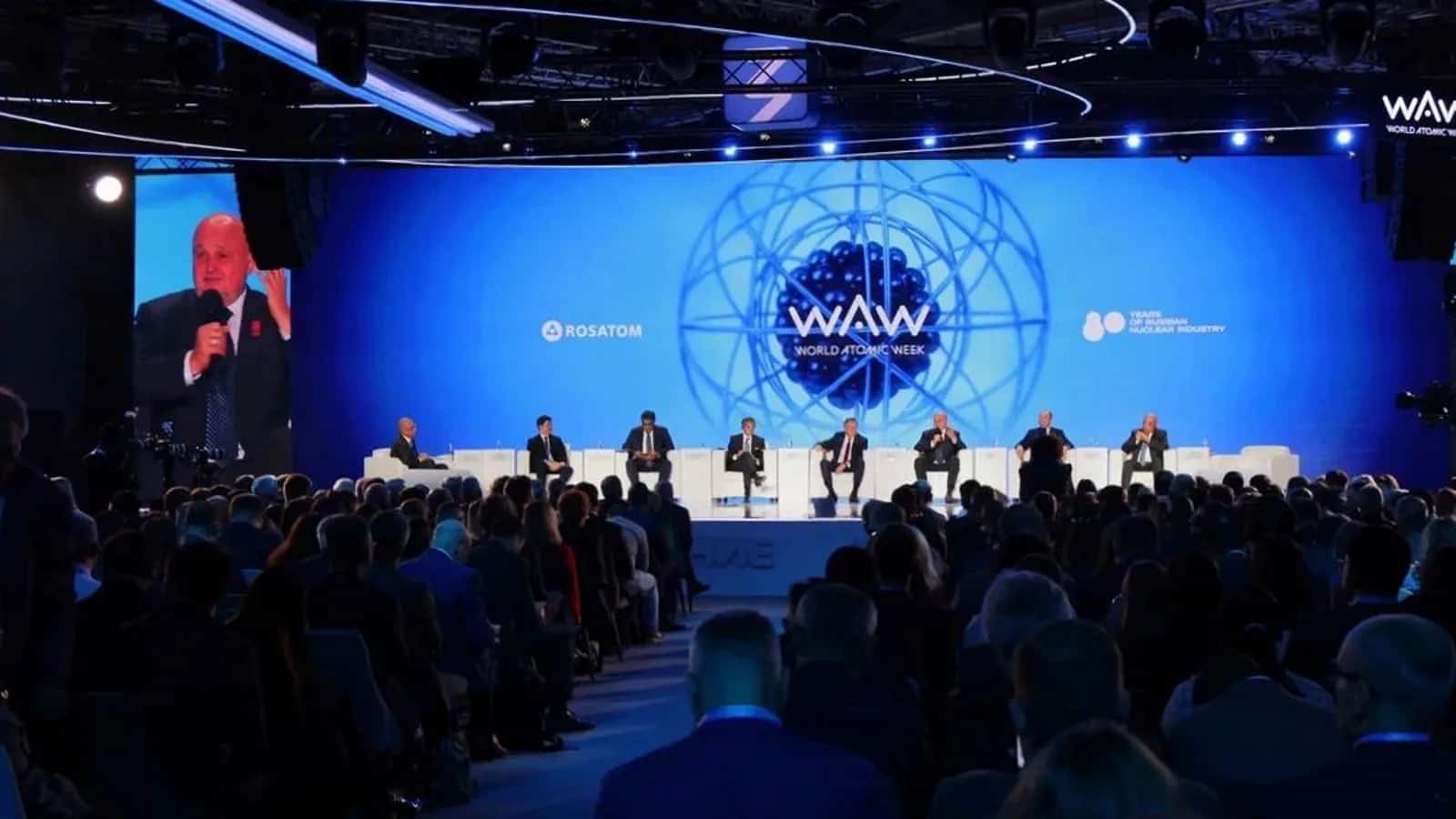
Electric power is a key driver of a country's economic development, and in Russia nuclear power plants account for about 20% of all electricity generated. This was stated by Sergei Tsivilev at the plenary session "It All Starts with the Atom," held as part of the World Atomic Week forum.
The head of the energy ministry pointed out that the total installed capacity of nuclear power plants in the country currently stands at 28.6 GW, yet even these figures do not fully reflect the strategic importance of the industry. Thus, under the Energy Strategy of the Russian Federation to 2050, the share of nuclear generation in the country's energy mix is to be increased to 25%, while the General Layout Plan for Electric Power Facilities through 2042 — the key long-term planning document — provides for the commissioning of 29 GW of nuclear capacity. "That is more than we have at present. The task is ambitious, but it is entirely within our reach," Sergei Tsivilev affirmed.
He noted that the General Layout Plan sets out where the new nuclear capacity will be located. Nuclear power plants are to be built in the Far East, the Urals and Siberia, where energy-intensive metallurgical, machine-building and chemical enterprises are concentrated. In addition, small-capacity nuclear power plants — both land-based and floating — will be built to supply power to the country's remote and hard-to-reach areas.
The head of the Russian Ministry of Energy also said that the electric power industry as a whole faces three challenges: the depletion of natural resources, environmental performance and safety. It is nuclear power that fully meets these requirements, the Minister stressed. Nuclear power plants have the lowest carbon footprint, while nuclear power generation produces virtually no greenhouse gas emissions and therefore has no adverse effect on the climate and reduces environmental risks.
Sergei Tsivilev also drew the attention of the plenary session participants to the contribution the nuclear industry makes to strengthening technological sovereignty — a task set by President of the Russian Federation Vladimir Putin. "Today nuclear power is not merely one of the types of generation, but a guarantor of energy sovereignty, the basis for the economic competitiveness of key industrial regions and the foundation for our future technological leadership," the head of the Russian Ministry of Energy said.
In conclusion, he stressed that technological sovereignty cannot be built by a single country alone — it has to be created together with friendly nations. Such work is already actively under way, including through cooperation in the peaceful use of nuclear energy. "Russia regards projects and technologies in the field of nuclear power as a basis for engagement with its interested partners," Sergei Tsivilev said.
Source: Ministry of Energy of the Russian Federation
We use cookies and Yandex Metrica for visitor statistics. By staying on the site, you agree to this and to our privacy policy.
Follow the forum news on our official MAX channel
Subscribe