19 October 2026
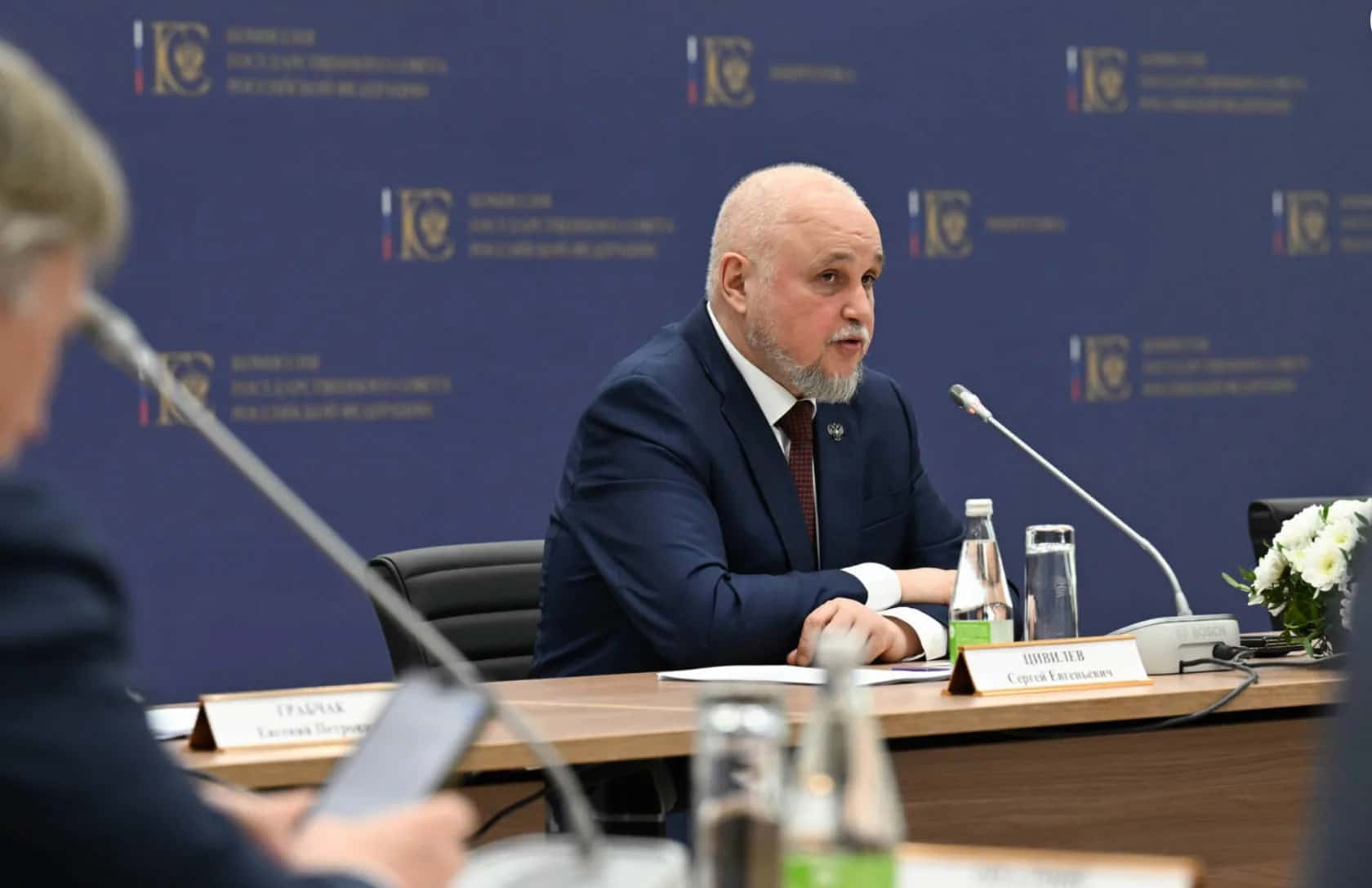
As part of the Kazan International Electric Power Forum ENERGOPROM, a meeting of the Energy Commission of the State Council of the Russian Federation was held, devoted to technological sovereignty, the development of domestic power machinery manufacturing and the implementation of the national project "New Nuclear and Energy Technologies".
The meeting was chaired by the commission's chairman, Head of the Republic of Sakha (Yakutia) Aysen Nikolaev. Taking part in the session were Aide to the President of the Russian Federation and Secretary of the State Council Alexey Dyumin, Minister of Energy of the Russian Federation Sergei Tsivilev, Rais (Head) of the Republic of Tatarstan Rustam Minnikhanov, as well as representatives of federal and regional authorities and heads of leading energy companies and power machinery manufacturers. Opening the meeting, Aysen Nikolaev stressed that ensuring the reliability and quality of power supply, along with building anticipatory demand for electricity, is the foundation of the country's economic development and of energy security. He named technological leadership as the strategic goal, pointing to the need to establish domestic production facilities and to develop Russian technologies. Particular attention was paid to the scale of the tasks ahead: under the General Layout for Power Industry Development through 2042, Russia plans to commission 88.5 GW of new generating capacity. This will require a substantial expansion of equipment manufacturing, including hundreds of gas and steam turbines, as well as the formation of a long-term industry order book.
In his address, Alexey Dyumin focused on global changes in the world's energy sector and on the need to move to a long-term planning model. He noted the importance of the balanced development of conventional, nuclear and renewable energy, as well as of promising areas including hydrogen technologies. In his words, the key conditions for the industry's development are attracting investment, improving production efficiency and adopting digital solutions. "The global energy sector is going through a period of profound transformation, the structure of the energy balance is changing; relying on the traditional technologies of the fuel and energy sector, on nuclear and renewable energy, we need to develop hydrogen and other promising technologies while maintaining a balanced approach. The key task is the transition from a demand economy — that is, meeting current needs — to an economy of long-term planning of demand and of technological accessibility for new consumers", Alexey Dyumin noted.
The key benchmarks of state policy were set out by Minister of Energy of Russia Sergei Tsivilev. He stressed the need to build steady demand for domestic equipment, to develop export potential and to strengthen the industry's technological independence. The minister separately noted the high potential of Russian companies, including small and medium-sized businesses, in creating modern technological solutions. "Our technological sovereignty gives us the opportunity to use every technology that exists in the world today. And our national project 'New Nuclear and Energy Technologies' is already a bid for technological leadership", Sergei Tsivilev said.
The minister also stressed Russia's openness to international cooperation with states and companies that share the principles of equitable engagement. "We want to develop the world on the basis of joint work to build technological sovereignty and energy justice", he noted. In his address, Rais (Head) of the Republic of Tatarstan Rustam Minnikhanov highlighted the steady development of the region's power industry. According to him, over the past 10 years the capacity of the republic's power system has grown by 16% to 8.9 GW, electricity generation has risen by more than 43% and consumption by 30%, reaching 37 billion kWh. The republic is among the leaders in the rate of growth of power consumption and plays a significant role in the energy balance of the Volga Federal District. Rustam Minnikhanov paid particular attention to the development of domestic power machinery manufacturing and to reaching the target share of Russian-made equipment of more than 90%. He noted that Tatarstan is creating the conditions for the localisation of production, that technology parks are being developed and that projects to produce gas turbine equipment and components are under way. During the discussion, participants in the meeting also identified the industry's key challenges, including the need to reduce the cost of domestic equipment, to meet delivery deadlines, to expand production capacity and to attract additional sources of funding. The meeting resulted in a set of priority tasks aimed at ensuring technological sovereignty and the sustainable development of the power industry. All proposals made by participants will be sent to the Ministry of Energy of the Russian Federation and to the Ministry of Industry and Trade of the Russian Federation for further consideration and to be taken into account in drafting regulatory and strategic documents. Holding the State Council commission meeting at the ENERGOPROM forum confirmed the event's status as a key platform for shaping strategic decisions in Russia's power industry.
We use cookies and Yandex Metrica for visitor statistics. By staying on the site, you agree to this and to our privacy policy.
Follow the forum news on our official MAX channel
Subscribe